
Optimizing SAP S4 HANA ERP Software with Cloud Deployment Strategies

Advanced SAP S4 HANA ERP software represents the pinnacle of enterprise resource planning technology, delivering comprehensive business management capabilities through next-generation digital platforms. This sophisticated software leverages intelligent automation to optimize complex business processes, reducing manual intervention while ensuring consistent performance across all organizational functions. Real-time analytics capabilities embedded within the system provides instant access to critical business metrics, enabling executives to make informed decisions based on current operational data rather than historical reports. 

The cloud-based deployment strategies that maximize ERP effectiveness mirror the broader transformation of software delivery models, where cloud computing has revolutionized how applications are hosted, scaled, and maintained.

Cloud Deployment Models and Architecture Patterns

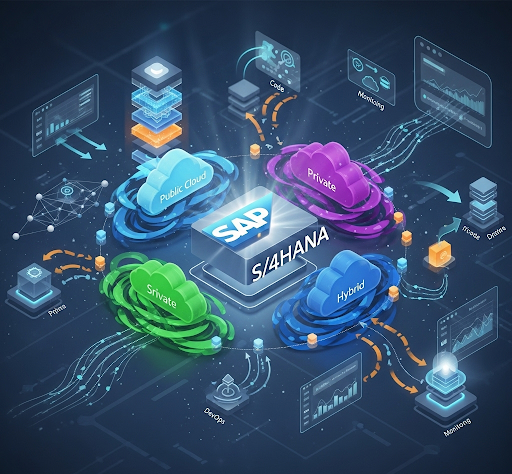
Cloud computing offers multiple deployment models that organizations can leverage based on their specific requirements, security needs, and operational preferences. Public cloud deployments utilize shared infrastructure managed by third-party providers like Amazon Web Services, Microsoft Azure, or Google Cloud Platform, offering cost efficiency and rapid scalability without requiring significant capital investments. 

Private cloud implementations offer dedicated infrastructure that provides enhanced security and control while maintaining cloud computing benefits like elasticity and self-service provisioning. 

Hybrid cloud strategies combine public and private cloud resources, allowing organizations to keep sensitive data and applications in private environments while leveraging public cloud scalability for less critical workloads.

Containerization and Microservices Architecture
Modern cloud deployments increasingly utilize containerization technologies like Kubernetes to package applications with their dependencies, ensuring consistent behavior across different environments. These containers provide lightweight, portable deployment units that start quickly and consume fewer resources than traditional virtual machines.

Microservices are breaking down big applications to a smaller, and independent service. Thus, allowing it to be easily deployable and scalable. In this approach, it improves development velocity, enables technology diversity, and enhances fault tolerance by isolating failures to individual services.

Infrastructure as Code and Automation

Infrastructure as Code (IaC) treats infrastructure configuration as software, using version-controlled templates to define and deploy cloud resources consistently. Tools like Terraform, AWS CloudFormation, and Azure Resource Manager enable automated provisioning of complex cloud environments while maintaining documentation and audit trails. This approach reduces deployment errors, enables rapid environment replication, and supports disaster recovery planning.

DevOps and Continuous Integration Deployment

Continuous Integration (CI) automatically builds and tests code changes, providing rapid feedback to developers and preventing integration issues. Continuous Deployment (CD) automates the release process, deploying tested code changes to production environments without manual intervention when quality gates are satisfied.

Cloud-native pipelines leverage managed services for build automation, testing orchestration, and deployment coordination. These platforms provide scalable build environments, integrated security scanning, and deployment approval workflows that support both simple and complex release strategies. 

Monitoring and Observability in Cloud Environments

Cloud applications require comprehensive monitoring and observability solutions to maintain performance, availability, and security across distributed systems. APM or Application Performance Monitoring tools do offer detailed insights to how an application behaves, which includes:

  • Response times
  • Resource utilization patterns, and;
  • Error rates

These tools help identify performance bottlenecks, troubleshoot issues, and optimize resource allocation for cost efficiency.

Distributed tracing systems track requests across multiple services and systems, providing end-to-end visibility into complex application transactions. This capability proves essential for debugging issues in microservices architectures where requests traverse multiple independent services before completion. Log aggregation and analysis platforms collect and analyze log data from all application components, enabling rapid incident response and forensic analysis.

Unlocking the Power of Feather iOS GitHub in Modern App Development

 Feather iOS GitHub has become a key tool in mobile app development, offering a lightweight, open-source framework for building efficient iOS apps. It provides developers with resources to enhance functionality, collaborate easily, and create customized solutions. This platform highlights how software and IT transform app development, driving innovation and enhancing workflows across industries.

Role of Feather iOS GitHub in Driving Business Innovation

Software is essential for digital operations, powering websites, apps, and cloud services. Developing these applications requires complex coding and a deep understanding of user needs. Whether for businesses or consumers, software continually evolves to meet demands. Artificial intelligence (AI) and machine learning (ML) are significant advancements in this field, allowing software to learn from data and enhance user experience.

Software is becoming increasingly intelligent and efficient, from personalized recommendations to AI chatbots.

Powering the Digital Transformation

IT infrastructure supports software applications and services through key components like hardware, networks, and systems. Essential elements include servers, data centers, cloud computing, and cybersecurity. As businesses move to the cloud, reliable IT infrastructure is vital, providing on-demand access to resources for quick scaling and innovation without the burden of physical servers. Cybersecurity is critical as data storage increases; protecting sensitive information and ensuring digital system integrity are top priorities. IT professionals play a key role in safeguarding businesses and consumers by implementing measures to prevent data breaches and cyberattacks.

What’s Next for Software and IT?

Create an image of a digital globe with interconnected lines, illustrating the growing influence of software and IT in shaping the future of global connectivity.

The future of software and IT holds excellent promise with emerging technologies like quantum computing, blockchain, and augmented reality (AR). Quantum computing aims to solve complex issues beyond the reach of traditional computers, while blockchain enhances data security and digital transactions through decentralization. AR is gaining popularity in sectors like retail and healthcare, enabling virtual try-ons and training simulations. Additionally, there’s a growing emphasis on sustainable IT practices, with companies developing energy-efficient data centers and eco-friendly hardware to address environmental concerns.

Software and IT are not just tools but essential components of the digital transformation reshaping every sector. As technology advances, so does the potential for software and IT to drive innovation, enhance productivity, and solve complex global challenges. For companies and individuals, keeping up with these trends will be essential for effectively maneuvering through the digital future.

Windows 10 Features Every IT Professional Should Know

IT professional and windows

Windows 10 offers a wide array of features tailored to meet the needs of IT professionals, enhancing their ability to manage and secure systems efficiently. To obtain a Windows 10 key, you can purchase it directly from the Microsoft Store, where both digital and physical copies are available. You can also check out authorized retailers and online marketplaces such as Amazon or Newegg. Alternatively, you can check out this Reddit thread about Windows 10 key. 

For businesses and educational institutions, Microsoft offers volume licensing options that provide multiple licenses at discounted rates. It’s essential to ensure that the key is from a reputable source to avoid counterfeit products and potential security risks.

Here are some of the key features every IT professional should be familiar with:

1. Software Center

Software Center is a crucial tool for IT administrators, providing a centralized platform to manage applications, software updates, and Windows upgrades. It simplifies the deployment and maintenance of software across an organization. Key functionalities include:

  • Application Management: IT admins can deploy, update, and uninstall applications remotely, ensuring all users have the necessary tools without manual installation.
  • Software Updates: Admins can schedule and automate updates, minimizing disruptions and ensuring systems are always up-to-date with the latest security patches and features.
  • Windows Upgrades: Software Center streamlines the process of upgrading to newer versions of Windows, reducing the complexity and time involved in large-scale rollouts.

2. Windows 10 S

Windows 10 S is a streamlined version of Windows 10, designed for specific computing tasks, particularly in educational institutions. Its key benefits include:

  • Enhanced Security: Windows 10 S allows only applications from the Microsoft Store, reducing the risk of malware and ensuring a safer computing environment.
  • Performance Optimization: By running a limited set of applications, Windows 10 S is optimized for speed and performance, making it ideal for devices with lower hardware specifications.
  • Simplified Management: The restricted environment simplifies management and reduces the need for extensive IT support, making it a cost-effective solution for schools and other organizations.

3. Stability and Security

Windows 10 is designed to provide a balanced combination of stability, security, and user experience. Some notable features include:

  • Windows Defender: Built-in antivirus and anti-malware protection that offers real-time threat detection and prevention, ensuring systems remain secure against emerging threats.
  • BitLocker: A full-disk encryption feature that protects data on devices, preventing unauthorized access even if the device is lost or stolen.
  • Windows Update for Business: Provides IT administrators with greater control over the deployment of updates, allowing for phased rollouts and minimizing potential disruptions.
  • Group Policy: Enables centralized management of security settings and configurations across all devices in an organization, ensuring compliance with security policies and standards.

READ ALSO: Some of Software Devices And Technology

Conclusion

Understanding these key features of Windows 10 enables IT professionals to leverage the platform’s full potential, ensuring efficient management, enhanced security, and optimal performance across their organization’s IT infrastructure.